Therapy Outcome Measures (TOMs) Train the Trainer course
About this course
Participants who have attended the Therapy Outcome Measures course and gained practical experience using TOMs (minimum 10 rated patients) may progress to this optional Train the Trainer programme. Those completing the course can become accredited trainers within their own organisation.
What delegates receive
- Virtual Live training
- Practical scoring experience using clinical case studies
- Course resources
- Certificate of attendance
- Opportunity to progress to Train the Trainer accreditation
Value of Train the Trainer accreditation to an organisation
Investing in an accredited TOMs Trainer is an investment in your whole service.
Rather than simply training individuals to use Therapy Outcome Measures, organisations develop an internal expert who can support colleagues, maintain consistent standards and help embed outcome measurement into everyday practice.
This creates greater confidence in the quality of the data being collected, strengthens service evaluation and quality improvement, and ensures new team members can be trained quickly and consistently. Over time, having an accredited TOMs Trainer helps organisations build a sustainable culture of outcome-focused practice, enabling them to demonstrate the real difference their services make to patients, families, commissioners and healthcare leaders.
Course duration
This course is delivered over two 1/2 days (usually mornings).
Course pricing
Pricing coming soon.
Please book your place here or alternatively, you can contact us if you are you would like to:
- Book four or more courses (we can offer you a discount)
- Make a block booking for a group
- Book a closed course
Course presenters

Professor Pam Enderby
Emeritus Professor of Community Rehabilitation and Speech and Language Therapist, OBE, PhD, DSc, FRCSLT
Pam Enderby is an emeritus professor of community rehabilitation and a qualified Speech and Language Therapist who has specialised in therapy-related research for over 40 years, with a special emphasis on measuring outcomes.
Professor Pam Enderby has received many awards and honours for her research and clinical contribution. These include Life Membership from the British Society for Rehabilitation Medicine, honorary Doctorates of Science from the University of the West of England and the University of Sheffield, the Tavistock Award for Aphasia, the Distinguished Scholar Award from the Society for Research in Rehabilitation and the Princess Margaret Award from the Stroke Association.

Freyja Bell
Highly Specialist Speech and Language Therapist, MRes Recipient of the NIHR Predoctoral Clinical and Practitioner Academic Fellowship (PCAF)
Freyja Bell is a Clinical Academic Speech and Language Therapist with over 19 years’ experience across paediatric and adult services, specialising in the assessment and rehabilitation of adults with neurological conditions, with a particular focus on stroke care. She works across both NHS and private settings, combining specialist clinical practice with research, education, and service development.
Freyja leads and delivers Fibreoptic Endoscopic Evaluation of Swallowing (FEES) services and provides specialist training in instrumental swallowing assessment. Within her NHS Trust, she is the lead trainer for Therapy Outcome Measures (TOMs), having delivered formal TOMs training for over six years. She has co-developed and published the multidisciplinary Therapy Outcome Measure Scale for Stroke, supporting improved outcome measurement and evidence-based practice across stroke rehabilitation.
Her academic work focuses on improving multidisciplinary team communication, enhancing the use of outcome measures, and improving rehabilitation pathways for people with neurological communication and swallowing difficulties. Freyja has recently published work relating to Therapy Outcome Measures and Wernicke’s aphasia and continues to advocate for the wider adoption of robust outcome measurement approaches across allied health professions.

Sue Pownall
PhD, FRCSLT
Dr Sue Pownall is a qualified Speech and Language Therapist. She worked in the NHS for over 35 years, leading a large SLT service providing care to adults across acute and community teams. Recently she became an independent consultant working with several partners to offer training and advice around clinical management, service improvement and clinical outcomes.
Sue’s clinical specialism is in dysphagia. She has extensive experience of working with clients with dysphagia resulting from a range of medical conditions, across clinical pathways and from both acute and community settings. She is an active researcher with an interest in assessment and treatment interventions for dysphagia. In addition, she collaborates with a US-based company to bring an evidence-based protocol of neuromuscular electrical stimulation to the UK to improve swallowing outcomes.
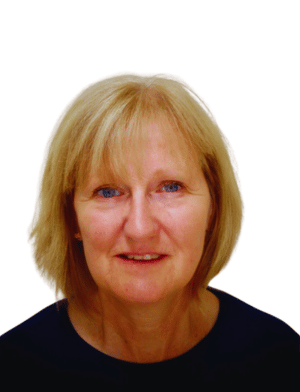
Alexandra John
PhD, MSc, RCSLT
Alexandra John is a qualified Speech and Language Therapist (SLT) and researcher with experience working with children with paediatric speech and language difficulties. She is interested in research on the effectiveness of speech and language therapy and on intervention outcomes. This includes the development of assessment tools and outcome measures, such as the Therapy Outcome Measures for Health professionals. She has also collaborated with researchers on the development of the Cleft Palate Audit Tool for Speech, which is used as a national tool at Cleft Centres in the United Kingdom.
Her Doctorate was on Therapy Outcome Measures used by SLTs across the United Kingdom. She has worked for 36 years with Professor Pamela Enderby on Therapy Outcome Measures (TOMs), their development, use, training and data analysis. She is co-author of the TOMs handbooks. The Royal College of Speech and Language Therapists has developed the RCSLT Online Outcome Tool (ROOT) for SLTs nationally to enter TOM data. This has allowed TOM data to be generated, enabling SLTs to utilise outcome data.
Course topics
What we’ll cover:
- developing confidence as a TOMs trainer
- ensuring reliable scoring across teams
- handling common learner questions
- understanding the evidence base behind TOMs
- using TOMs for quality assurance and service evaluation
- overview of the full range of adapted scales
- research and statistical foundations
- assessment and certification.
Who this course is suitable for
Participants who have completed the Therapy Outcome Measures course and gained practical experience using TOMs (a minimum of 10 rated patients) may progress to this optional Train the Trainer programme.
Booking information
This course is available on various dates throughout the year. To view available course dates, select your preferred date and book your place, please click here.
During the booking process, you can select to reserve a place instead (while you confirm you can attend or to organise payment through your employer for example). We can hold your place for up to four weeks, if we have not heard from you after this time, we may need to cancel your reservation so other people can attend the training.
Course Beetle is an approved supplier for NHS Trusts, Local Authorities and Schools.
Booking for this course has not gone live yet, please check back soon!
toms, measure, Therapy Outcome Measures, therapy outcomes